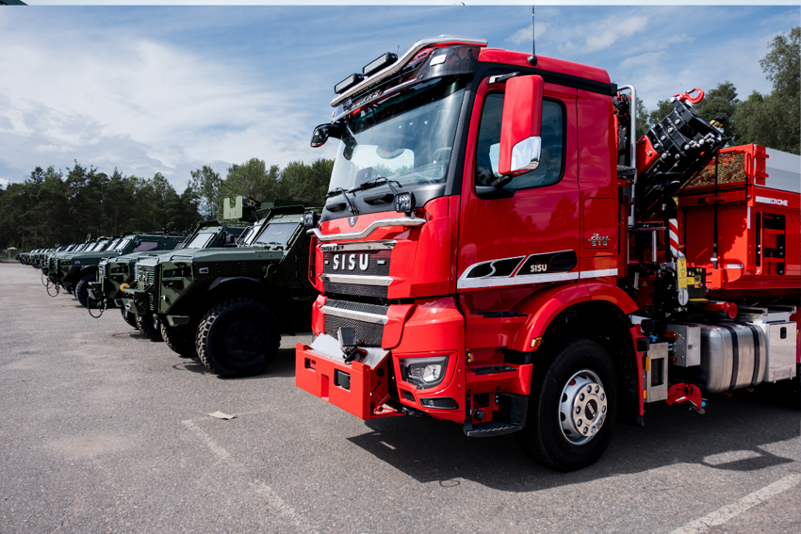
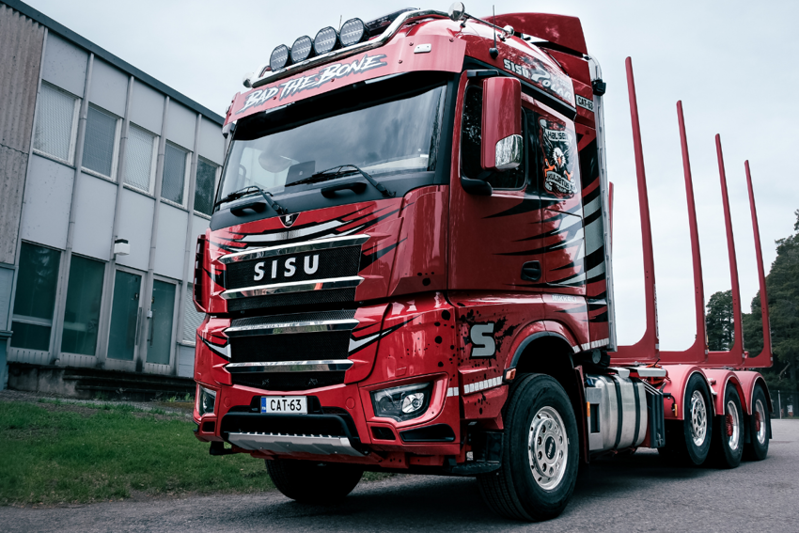
Sisu Auto is a Finnish manufacturer of heavy vehicles, specializing in the development and production of trucks and military vehicles. Sisu Auto's vehicles are often built to order for demanding conditions, making every delivery unique.
In practice, this means a high degree of variation and constantly changing product data that must be managed reliably from design all the way to production. Sovelia Core PLM makes this possible by bringing product data together in one place and ensuring that the same information drives the entire process.
In manufacturing, product lifecycle management is often slowed down by scattered data, mismatched structures between design and production, and complex configuration. Incomplete change management and manual data transfer add further delays and increase the risk of errors. Sisu Auto implemented the Sovelia Core PLM solution back in 2015 to address these challenges, which were showing up in very concrete ways in day-to-day operations.
“Information was scattered across different places, and we didn’t have one clear source of truth. That slowed us down and created a lot of unnecessary chasing down information,” says Petri Kananen, Director of Sisu Auto.
Sovelia Core laid the foundation for unified product data
With Sovelia Core PLM, Sisu Auto was able to centralize its product data in one place. The PLM solution also helped improve data quality and enabled more efficient management of product structures and configurations.
Once Sovelia Core was in place, sales, engineering, and production began working from the same data, which streamlined operations and reduced errors, particularly in data transfer and the interpretation of product structures. This created a strong foundation for product data management and a unified way of working across the whole organization.

The development path: From PLM to production control
Over more than a decade, Sisu Auto has significantly developed and expanded its use of Sovelia Core. Initially, the solution focused on product lifecycle management, but it has since been extended step by step to cover production as well. A key milestone in this development has been the introduction of the MBOM, the manufacturing structure.
MBOM connects design and production
Within Sovelia Core PLM, the MBOM (Manufacturing Bill of Materials) serves as production's view of the product. The MBOM is based on the product's engineering structure, the EBOM (Engineering Bill of Materials), which describes the parts and components the product consists of.
When the EBOM is enriched with production data, such as work steps, assembly sequence, and the required materials, tools, and resources, the result is the MBOM. The MBOM describes how the product is actually manufactured.
The design and production views are kept separate but stay synchronized as a whole. This way, changes are updated in a controlled manner across the entire chain without errors, and production gets clear, up-to-date instructions straight from the same system, with no manual data transfer required.
The concrete benefits MBOM has brought to Sisu Auto
At Sisu Auto, Sovelia Core acts as the bridge between design and production. Because the MBOM used by production is based directly on the product's engineering structure, it ensures consistent, up-to-date product data across the entire organization.
The production structure can be adapted to manufacturing needs, for example in terms of work steps, assembly sequence, and factory-specific requirements, without altering the original design data. This enables more efficient production planning and optimization, as well as flexible manufacturing across different factories, without duplicating product data or maintaining separate versions.
“When you’re building a lot of customer-specific solutions, everything has to be based on up-to-date, transparent product data – in production too.”
MBOM streamlines production setup
At Sisu Auto, the MBOM is a key tool in production setup, the preparation work carried out before a job begins. Production setup defines the work steps, assembly sequence, and the materials and resources a product requires.
This information is captured directly in the MBOM, so production no longer needs to gather it from multiple sources. That speeds up the setup of lines and workstations, reduces errors, and shortens lead times.
The MBOM also makes it possible to standardize and reuse setup data. When similar products are manufactured, production can be started up quickly by reusing structures and work steps that have already been defined.
This is especially important in Sisu Auto's kind of customer-specific manufacturing, where there is a lot of variation and production is constantly changing. Efficient production setup has a direct impact on production capacity and cost-efficiency.
How production setup impacts procurement
At Sisu Auto, production setup also has a direct impact on procurement, since it determines what materials, components, and resources are needed, at what stage, and on what schedule. When the MBOM contains precise information on work steps, assembly sequence, and material requirements, procurement can forecast demand far more effectively.
More accurate, up-to-date setup data reduces:
- rush orders
- excess inventory
- and material shortages on the production floor
At the same time, procurement processes can be synchronized with the production schedule, which improves delivery reliability and supports cost-efficient operations at Sisu Auto.
The MBOM also allows procurement to see product-specific variations and customer requirements at an early stage. This makes supplier collaboration easier, supports material standardization, and improves the management of alternative components. As a result, procurement can operate proactively rather than reactively, improving performance across the entire supply chain.
Integration keeps data flowing
At Sisu Auto, Sovelia Core is integrated with CAD and ERP systems, allowing product data to move automatically between systems. Customer-specific requirements flow directly into configuration, design, and on into production. Production no longer needs to compile data from different sources; instead, it works directly from the product structure managed in Sovelia Core, where work steps, materials, and other production data have already been defined.
Change management and traceability
As the use of Sovelia Core has expanded, change management at Sisu Auto has improved significantly. ECR and ECO processes have become more systematic, and the impact of changes is now visible across the entire value chain, from design to production.
This improves data traceability and ensures that Sisu Auto's organization operates on the basis of consistent, up-to-date information.
“Now sales, engineering, and production are all looking at the same data. That’s been the biggest positive change, but change management has also improved significantly. It’s far more controlled these days. We can clearly see what’s been changed and why,” says Kananen.
The next step for Sovelia Core customers
Sisu Auto's development path shows that the value of Sovelia Core grows significantly when its use is extended toward production. The MBOM isn’t a separate add-on, but an essential part of a bigger picture that brings design and production together into a single, well-managed process.
“Sovelia Core brings clarity to complexity,” says Petri Kananen, summing up the value of Sovelia Core.
When a finished vehicle is delivered to a customer, it carries with it the full expertise, reliability, and professionalism of the whole Sisu team. That sets a high bar for product data management too. Everything in the product lifecycle has to be right from the very start.
Sovelia Core's role is to make sure that expertise is carried through every stage, from design to manufacturing, without gaps or errors. When data is well managed and up to date, the end result can be trusted to meet requirements even in the most demanding use cases.
A vehicle's lifecycle is long, which is why Sisu Auto also needs to be able to rely on all the related data to stay reliable and usable for years to come.
For Sisu Auto to keep meeting its production goals going forward, it's essential to have well-functioning processes underpinned by unified systems. That translates directly into more efficient operations, stronger quality management, and a stronger competitive position.